Hand Embroidery vs. Machine Embroidery: An Honest Look
What really separates hand and machine embroidery, what satin and fill stitches are, and exactly how your CustomStitch House cap or napkin gets stitched.
3 min read
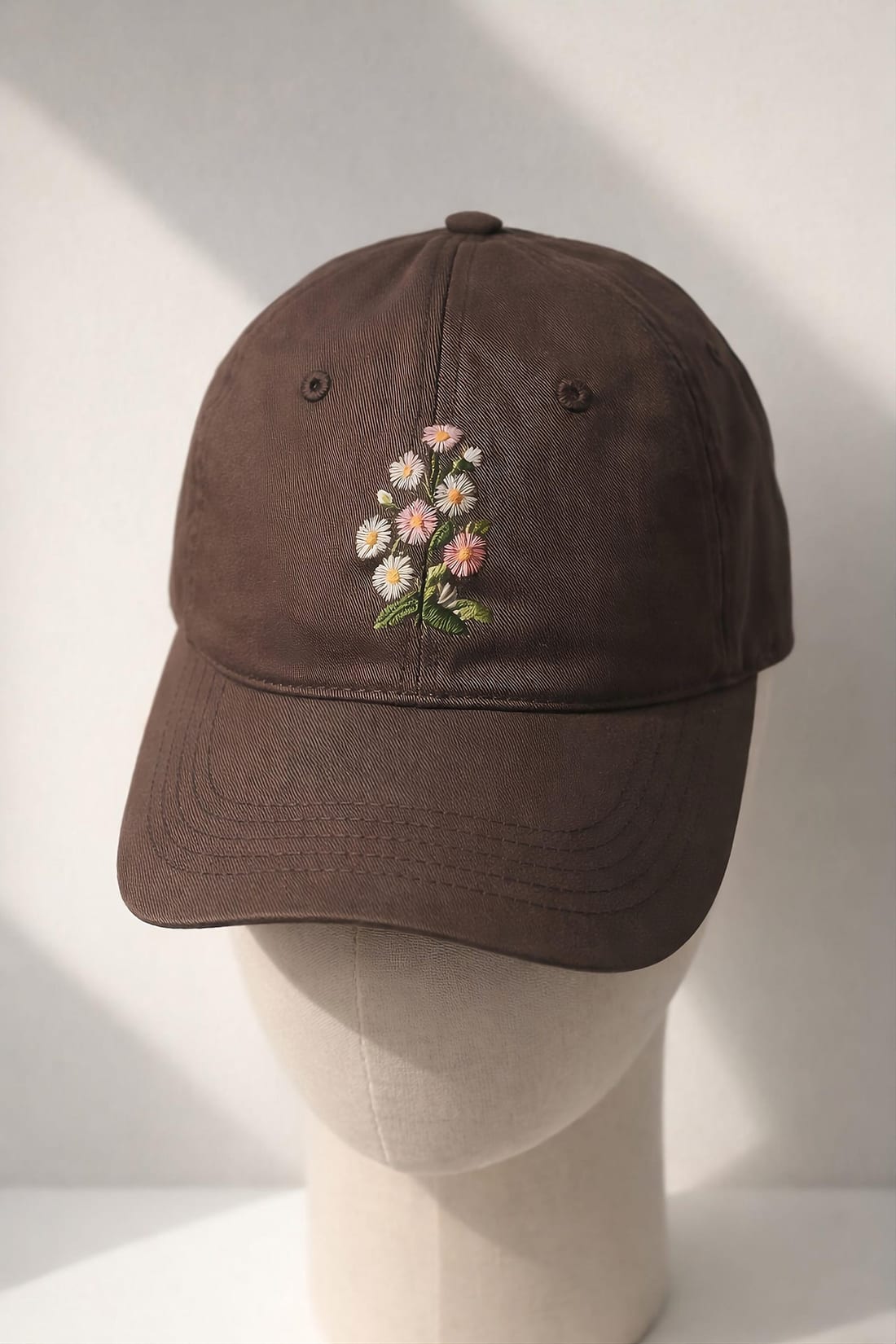
People sometimes ask us whether our hats are hand-embroidered. The short answer is no: everything CustomStitch House sells is made on embroidery machines. The longer answer is more interesting, because hand and machine embroidery are two genuinely different crafts, each with its own skills. Here is how they compare, with no marketing gloss.
Hand embroidery: time, touch and one-of-a-kind results
In hand embroidery, an artisan traces or sketches the design onto fabric, stretches it in a hoop or frame and works every stitch with a needle. Even a small motif can take several hours; the large embroidered pictures of Vietnam's craft villages take far longer. The tools are cheap, but the skill takes years to build.
Because each stitch is placed by hand, no two pieces come out exactly the same. That variation is part of the charm, and part of why fine hand embroidery costs what it does.
Machine embroidery: a file, a hoop and a lot of preparation
A modern embroidery machine does not "draw" freely. It follows a stitch file, created by a process called digitising, in which every stitch's type, direction, length and order is planned in software. The fabric is clamped in a hoop together with a stabiliser, a backing layer that keeps the fabric from stretching or puckering while thousands of stitches go in. The hoop size also sets the largest design you can stitch in one go.
Once a design is digitised well, a machine can stitch it in minutes and repeat it identically, which is what makes personalised items affordable. The hard part moves from the needle to the planning: a badly digitised design will pucker, gap or snag no matter how good the machine is.
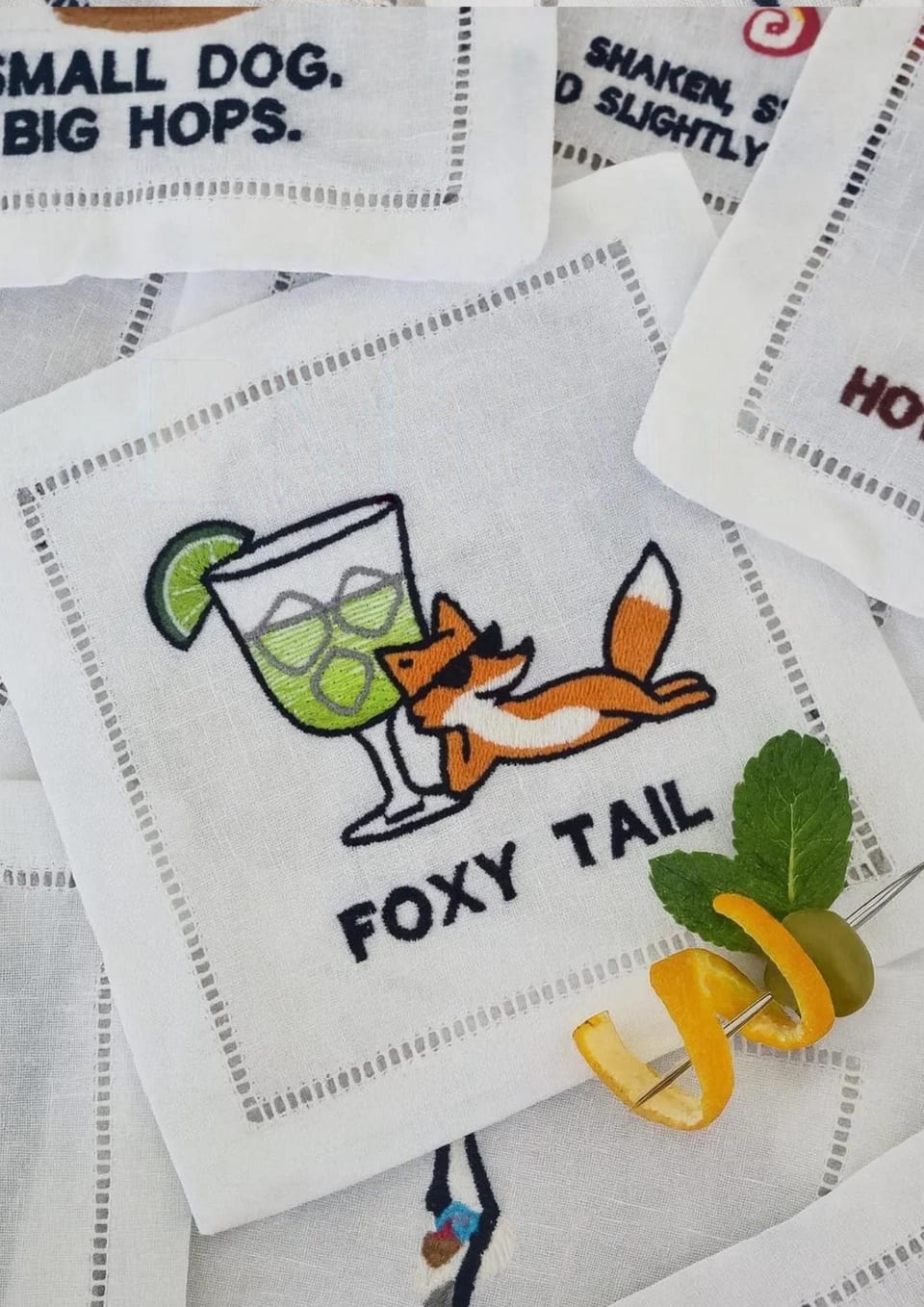
The three stitches you see on our products
Running stitch
The simplest stitch: a single line of thread following a path. It is used for very fine details around 1 mm wide, such as whiskers or thin outlines. A triple run, going over the same path three times, makes a line bolder.
Satin stitch
Satin, also called a column stitch, lays threads side by side across a narrow shape. The result is smooth and glossy, which is why it is used for lettering, borders and small details. Guidance on how wide a satin column can safely be varies: one supplier suggests roughly 2 to 7 mm, while the software maker Wilcom recommends about 10 mm as a working maximum. Go wider and the long floats of thread are more likely to snag.
Fill (tatami) stitch
For larger areas, digitisers use fill stitches, often called tatami: rows of short stitches in an offset pattern that cover a shape with a flat, lightly textured surface. Fills are sturdier than satin for big shapes, but less suited to tiny details. Underneath, a light underlay of stitches is usually laid first to hold the fabric to the stabiliser.
How an CustomStitch House order is made
- Design and digitising. Each design has to be digitised for the item it goes on. A curved cap front behaves differently from flat linen, so the files differ.
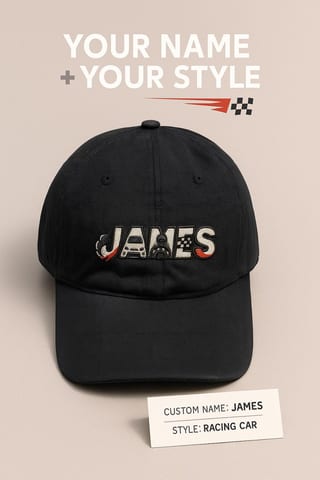
- Your personalisation. For custom names, we choose a font size that stitches cleanly. Very small text and hairline details do not reproduce well in thread, so we may suggest a slightly larger size, and we confirm details with you before stitching.
- Stitching to order. Your piece is hooped with stabiliser, stitched on our machines in our Vietnam workshop, then finished and packed for shipping.
Which is better?
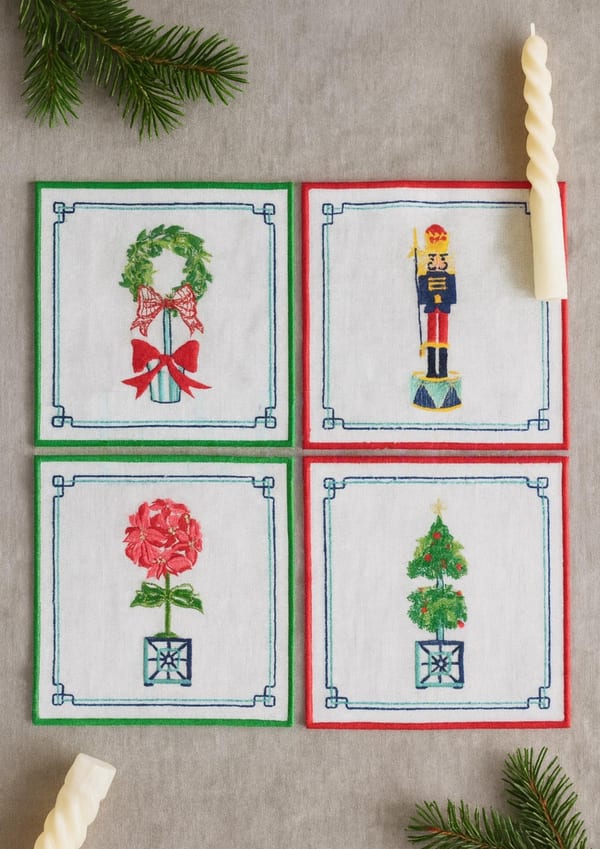
Neither, really; they answer different needs. If you want a unique heirloom, a hand-embroidered piece from an artisan is worth every penny. If you want a well-made cap with your partner's name, or a matching set of cocktail napkins at a fair price, machine embroidery is the right tool. We would rather tell you exactly what you are buying than borrow the romance of a craft we do not practise.
Our promise is simple: machine-made, carefully digitised and stitched to order.